
Understanding PTO Drive Shafts for Agricultural Tractor-Implement Power Transmission
Introduction to PTO Drive Shafts
Power Take-Off (PTO) drive shafts are critical components in agricultural machinery, serving as the conduit for power transmission between tractors and various implement attachments. The design and functionality of PTO drive shafts facilitate seamless energy transfer, which is essential for the operation of many farming implements such as mowers, tillers, and balers. By connecting the tractor’s engine power to the implement, PTO drive shafts significantly enhance the performance and efficiency of agricultural tasks, making them a vital part of modern farming operations.
The significance of PTO drive shafts cannot be understated. They are designed to engage and disengage power transmission safely and efficiently, allowing operators to switch between different implements without the need for excessive manual labor or time-consuming adjustments. This capability ensures that farmers can optimize their workflow, concentrating on productivity while minimizing downtime during field operations. Moreover, the PTO drive shafts contribute to the versatility of tractors, enabling them to power a wide array of implements, thereby enhancing the utility of the tractor itself.
In addition to their operational benefits, PTO drive shafts are engineered with various safety features to protect both the operator and the equipment. These include shields to prevent entanglement and mechanisms that reduce risks during abrupt disengagements. Regular maintenance of PTO drive shafts is also crucial to ensure their longevity and reliability, as wear and tear can significantly impact power transmission efficiency.
Thus, understanding PTO drive shafts' mechanisms and their role in agricultural power transmission is essential for optimizing farming practices. As demands in agriculture continue to evolve, knowledge of the functionality and importance of these components can lead to improved operational efficiency and sustainable farming practices.
Key Components of PTO Drive Shafts
PTO (Power Take Off) drive shafts are critical components in the agricultural sector, enabling effective power transmission from tractors to various implements. Understanding the key components of these shafts is essential for ensuring their optimal functionality and safety during operation. The primary components of PTO drive shafts include universal joints, telescoping tubes, and safety guards.
Universal joints are pivotal parts of the PTO drive shafts, allowing for flexible rotation between the tractor and the implement. This flexibility is crucial as it accommodates the operational movements of the tractor while maintaining a consistent transfer of power. Universal joints reduce the strain that might occur during operation, promoting durability and longevity in the overall assembly.
Another important component is the telescoping tubes, which provide the necessary length adjustment for the PTO drive shaft. These tubes allow for the shifting of distance between the tractor and the implement, particularly when the implement raises or lowers during operation. The ability to absorb varying lengths enhances the efficiency of the power transmission process, accommodating different working conditions and implement types.
Safety guards are also an integral aspect of PTO drive shafts, serving as a protective measure against accidental contact with moving parts. These guards prevent entanglement, which can lead to severe injuries. It is essential for operators and bystanders to maintain a safe environment around working equipment, making safety guards a fundamental component in promoting operational safety.
In summary, each of these components—universal joints, telescoping tubes, and safety guards—collaborates to enhance the functionality, adaptability, and safety of PTO drive shafts. Understanding the role of these components is integral for anyone involved in agricultural operations, as it facilitates better maintenance practices and overall operational safety.
Understanding PTO Shaft Standards: ISO 5673
The International Organization for Standardization (ISO) has established a set of standards for Power Take-Off (PTO) drive shafts, specifically outlined in ISO 5673. This standard categorizes PTO shafts into six distinct series, ranging from Series 1 to Series 6. Each series is designed to meet specific power and speed requirements, ensuring efficient and safe operation of agricultural implements.
Series 1 shafts are typically the most commonly used for small agricultural tractors and implements, suitable for low-power applications. They generally feature a smaller diameter and lower torque capacity, making them ideal for lighter tasks. As the series number increases, so do the dimensions and the power capabilities of the PTO shafts. For example, Series 2 shafts are designed for slightly higher power requirements, ideal for medium-sized tractors.
As we move into Series 3, Series 4, Series 5, and finally Series 6, the dimensions and specifications of the PTO shafts progressively accommodate larger horsepower tractors and more demanding agricultural tasks. Series 6 shafts are capable of handling very high power outputs, suitable for heavy-duty agricultural operations and implements.
Adhering to the ISO 5673 standards is crucial for ensuring compatibility between tractors and implements. These standards not only facilitate the matching of PTO shafts with the appropriate power requirements but also promote safety by providing design specifications that prevent mechanical failures. A correct match ensures that the drive shaft can handle the torque without risk of breakage or excessive wear.
In conclusion, understanding the ISO 5673 PTO shaft standards is essential for farmers and agricultural equipment operators. It aids in the safe and effective transmission of power from tractors to various equipment, thereby enhancing operational efficiency while ensuring compliance with established safety norms.
Power and Torque Ratings: Selecting the Right PTO Shaft
When selecting a Power Take-Off (PTO) shaft for agricultural applications, understanding power and torque ratings is crucial. These ratings assist in determining the capability of the PTO shaft to effectively transmit power from the tractor to various implements, ensuring that each component operates optimally without compromising performance or safety. The key to achieving optimal performance lies in matching the PTO ratings to the specific power requirements of the tractor and the implement attached.
PTO shafts are designed to handle specific amounts of power, which is generally measured in horsepower (HP). This rating signifies the maximum amount of power that the PTO shaft can transmit. Similarly, torque ratings, usually expressed in pound-feet (lb-ft), reflect the twisting force the shaft can endure. It is essential to understand that power and torque ratings are interrelated; a higher horsepower rating can often correlate with higher torque levels. Therefore, when selecting a PTO shaft, one must consider both ratings to ensure an efficient and safe operation.
Each tractor-implement combination will have its unique power requirements dictated by the implement's design, the tasks to be performed, and the tractor's capabilities. Hence, before purchasing or replacing a PTO shaft, it is vital to consult the manufacturer's specifications for both the tractor and the implement in use. A miscalculation could lead to underperformance or, worse, damage to either the PTO shaft or the connected equipment.
By carefully assessing both power and torque ratings, farmers and operators can enhance productivity while minimizing the risk of mechanical failures. This thoughtful approach to selecting the right PTO shaft plays a significant role in the effective functioning of agricultural machinery, ultimately contributing to improved operational efficiency.
Critical Safety Features of PTO Drive Shafts
PTO (Power Take-Off) drive shafts play a critical role in agricultural machinery, facilitating power transfer from tractors to implements. However, operating these systems carries inherent risks, making safety features essential for minimizing accidents and ensuring user protection. One of the primary safety components is the non-rotating guard, which covers the rotating shaft during operation. This guard effectively prevents accidental contact with the rotating parts, thus safeguarding individuals working around the machinery.
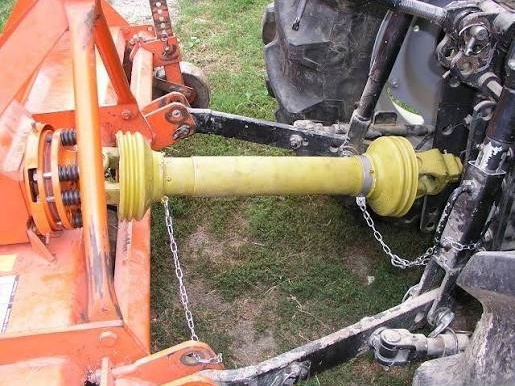
In addition to the non-rotating guard, PTO drive shafts are often equipped with safety chains. These chains serve a dual purpose; they not only secure the drive shaft in place but also provide a safety mechanism should the shaft disconnect unintentionally. If a failure occurs, the safety chains will catch the shaft, preventing it from whipping around potentially causing injury to the operator or nearby personnel. Utilizing these chains is crucial for maintaining a safe working environment, especially in high-tension conditions that agricultural tasks often entail.
Another significant safety feature of PTO drive shafts is the CE marking, which indicates compliance with European safety standards. This certification signifies that the product has undergone stringent testing for safety and reliability before being placed on the market. Equipment marked with the CE label assures users that essential safety requirements have been fulfilled, promoting greater confidence in the operational safety of the machinery.
The integration of these safety mechanisms—non-rotating guards, safety chains, and CE marking—highlights the importance of prioritizing user safety when working with PTO drive shafts. By adhering to these safety features, operators can significantly reduce the likelihood of accidents, ensuring a safer workplace in agricultural settings.
Selecting PTO Drive Shafts Based on Tractor HP and Implement Needs
When it comes to selecting PTO (Power Take-Off) drive shafts for agricultural machinery, understanding the relationship between tractor horsepower (HP) and the specific requirements of implements is crucial. The performance and efficiency of power transmission directly hinge on this correct selection process.
The first consideration is the horsepower rating of the tractor. This rating indicates the maximum power output of the engine and determines the load that can be safely managed by the PTO. Generally, manufacturers recommend using PTO drive shafts rated for a horsepower value that matches or slightly exceeds the tractor’s output. This practice ensures adequate performance without overworking the components, leading to prolonged durability and reduced maintenance costs.
Next, it is essential to evaluate the particular needs of the implement being used. Each implement has its specifications regarding power requirements, operational speed, and load capacity. For instance, a rotary mower might require a different PTO drive shaft configuration than a hay baler. Additionally, the implement’s weight and the type of work it performs should inform the choice, as this can influence both the design of the PTO drive shaft and the overall power transmission setup.
Furthermore, factors such as the working angle and length of the PTO drive shaft must be taken into account. A properly matched PTO drive shaft will not only facilitate the efficient transfer of power but also minimize wear on both the tractor and implement. Misalignment or inappropriate length can lead to increased stress and potential failure of the drive shaft.
In conclusion, selecting the suitable PTO drive shaft involves a careful assessment of both tractor horsepower and implement requirements. By ensuring compatibility, operators can achieve optimal efficiency and performance during agricultural operations.
Calculating the Proper Length for PTO Drive Shafts
Determining the correct length of a Power Take-Off (PTO) drive shaft is essential for ensuring efficient power transmission between the agricultural tractor and the implement. An accurately measured PTO drive shaft not only maximizes performance but also promotes safety during operation. Various methods can be employed to calculate the required length effectively.
The first step in the calculation is to consider the distance from the tractor's PTO output to the implement’s input connection. This distance can be measured with a tape measure while accounting for any potential angularity that may affect the shaft’s effective length. Ideally, the PTO drive shaft should have a slight amount of overlap with the implement’s input for a secure fit, which generally ranges from 1 to 2 inches. This overlap is crucial as it compensates for movement caused by the PTO shaft's rotation.
In addition to physical measurements, it is also essential to analyze the type of tasks the machinery will perform. Different implements may require varying lengths based on their design and intended use. For example, rotary cutters and tillers may necessitate different configurations because of unique operating demands. Consequently, not only must the shaft be measured correctly, but the application requirements should also be thoroughly understood to avoid miscalculations.
Employing best practices when determining the appropriate PTO drive shaft length significantly reduces risks associated with incorrect lengths, such as mechanical failure or safety hazards. A shaft that is too short can lead to disengagement during operation, while an excessively long shaft may result in excessive torque strains or vibrations, further apportioning risk to both the operator and the machinery. In conclusion, consistently verifying the length of PTO drive shafts through these methods ensures effective and safe use of agricultural equipment.
Quality
Expert driveshaft manufacturing with 20 years experience.
GET IN TOUCH
Tel:+86-571 88065675 | +86-571 88842852
E-mail:oceanindustry@vip.163.com
Fax:+86-571 88844378
Address:4th Floor, Block 2, Qianjiang Century Industrial Park, 2327 Hongning Road,Ningwei Town,Hangzhou, China
© 2005. All rights reserved.