
Selecting PTO Drive Shafts for Agricultural Machinery: A Step-by-Step Methodology
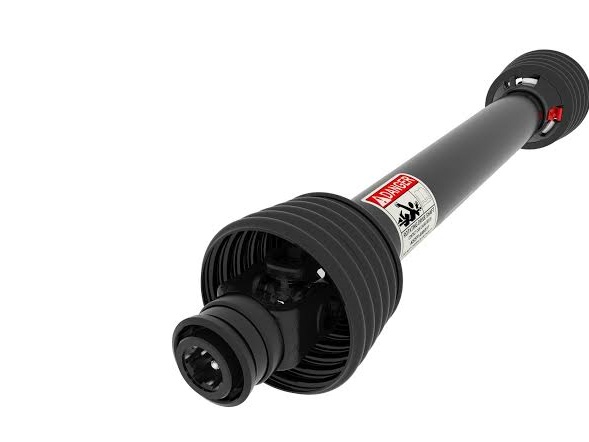
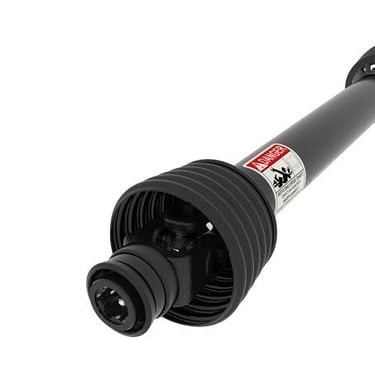
Understanding PTO Drive Shaft Engineering
When it comes to agricultural machinery, selecting a Precision Torque Output (PTO) drive shaft is paramount for optimal performance and safety. This article delineates a step-by-step methodology to navigate the complexities of PTO shaft selection, ensuring compatibility and efficiency in operation.
Step 1: Determine Rated Power
The first step in PTO shaft selection is to ascertain the tractor's PTO rated power, expressed in horsepower (hp) or kilowatts (kW). This is typically measured at standard operating speeds of 540 or 1000 RPM. Understanding the available power is essential as it forms the foundation for subsequent calculations and selections.
Step 2: Match the PTO Shaft Series
Next, refer to ISO 5673-1 to match the tractor's rated power with the appropriate PTO shaft series. The series breakdown is as follows:
- Series 1: ≤16 hp / 35 Nm
- Series 2: ≤25 hp / 60 Nm
- Series 3: ≤45 hp / 100 Nm
- Series 4: ≤65 hp / 140 Nm
- Series 5: ≤95 hp / 190 Nm
- Series 6: ≤130 hp / 260 Nm
These classifications help in designing and selecting shafts that can withstand the specific requirements of the application.
Step 3: Calculate Required Torque
The required torque must be calculated with the addition of a service factor to account for operational variances in stress. For lighter loads, use a service factor of 1.3, while for heavy shock loads, increase to 2.0 as specified by ISO standards.
Step 4: Determine Shaft Length
Measuring the shaft length is crucial. It involves measuring the distance from the tractor's PTO stub to the implement's input while ensuring the alignment is horizontal. Calculate both collapsed (closed-center measurement) and extended lengths, ensuring at least a 1/3 tube overlap is maintained for safety and functionality.
Step 5: Select Universal Joint Type
Select the appropriate universal joint based on the working angle. For angles ≤25°, a standard cross is suitable; for wide angles ≤80°, choose a wide-angle joint. If a constant velocity is required, opt for a CV joint.
Step 6: Choose Overload Protection
Deciding on overload protection is imperative. Options include:
- Shear Bolt: Economical and one-time sacrificial.
- Friction Clutch: Adjustable slip torque that is reusable.
- Ratchet Clutch: Provides both overrunning and overload protection.
Step 7: Verify Compliance
Lastly, ensure that the PTO shaft complies with relevant safety standards such as ISO 5674, CE, and OSHA. This compliance is essential for ensuring both legal safety measures and operational reliability.
Worked Example
For instance, let’s size a PTO shaft for a 75 hp tractor driving a rotary tiller requiring 60 hp with a working angle of 15°. The calculations proceed as follows:
- Rated power indicates series 5 is appropriate.
- Calculated torque using the service factor yields a safe operating standard.
- Universal joint type suitable for 15° angle is confirmed.
Following these steps promotes informed decisions adhering to engineering integrity, ensuring robust and resilient PTO shaft solutions for agricultural applications.
Conclusion
With over 20 years of engineering selection support, dynamic balance testing, and custom PTO shaft solutions, we emphasize thoroughness and precision in every selection process. Agricultural equipment design engineers and OEM technical teams can utilize this guide to enhance operational success and equipment longevity.
Quality
Expert driveshaft manufacturing with 20 years experience.
GET IN TOUCH
Tel:+86-571 88065675 | +86-571 88842852
E-mail:oceanindustry@vip.163.com
Fax:+86-571 88844378
Address:4th Floor, Block 2, Qianjiang Century Industrial Park, 2327 Hongning Road,Ningwei Town,Hangzhou, China
© 2005. All rights reserved.