
Single and Double Universal Joint PTO Drive Shafts for Agricultural Equipment
Introduction to PTO Drive Shafts
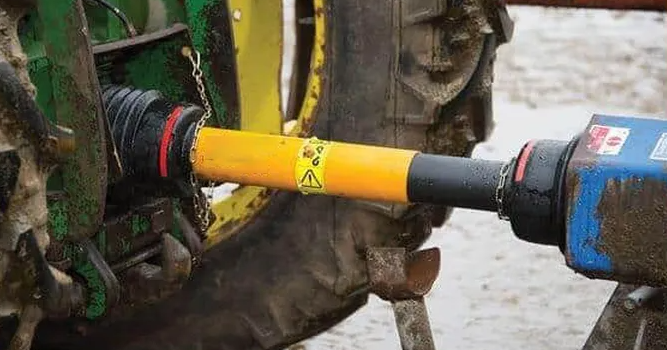
Power Take-Off (PTO) drive shafts are vital components in agricultural machinery, transmitting power from the tractor to various attachments such as tillers, balers, and mowers. The choice between a single universal joint and a double universal joint PTO drive shaft can significantly affect performance and efficiency. This blog aims to provide a comprehensive comparison between the two, focusing on critical factors such as transmission smoothness, allowable installation angles, power loss, noise levels, component failure rates, and assembly space requirements.
Transmission Smoothness and Allowable Installation Angles
When examining transmission smoothness, the double universal joint PTO drive shaft stands out due to its design that accommodates larger angles between the input and output. It offers greater angular flexibility and results in less vibration, leading to smoother operation. Conversely, single universal joints can introduce transmission inconsistencies, especially when installed at steep angles, which can lead to increased vibration and harshness in operation.
The allowable installation angle for single universal joints is typically limited to about 15 degrees. Exceeding this can lead to significant operational inefficiencies. In contrast, double universal joints allow installation angles up to 30 degrees, which can be advantageous for equipment used in varied terrain.
Power Loss and Noise Levels
Power loss is a critical consideration in choosing between single and double universal joint systems. The double universal joint design translates to lower power loss during transmission, as it can maintain aligned rotations more effectively across varying angles. This increased efficiency is particularly important for agricultural tasks requiring consistent power output.
In terms of noise levels, single universal joints tend to produce more operational noise due to their mechanical design. The more complex arrangement of double universal joints often results in quieter operation, making them more suitable for environments where noise reduction is a priority.
Component Failure Rate and Assembly Space Requirements
The component failure rate is another vital factor. Single universal joints typically experience higher failure rates, primarily when subjected to non-optimal angles and high-stress conditions commonly found in agricultural applications. In contrast, double universal joints generally provide a more robust solution with a lower likelihood of component failure, ensuring greater reliability for equipment operators.
However, double universal joints require more assembly space due to their design complexity, which may be a concern in tighter layouts. In contrast, single universal joints are simpler and more compact, making installation in constrained spaces easier.
Actionable Selection Rules
When selecting PTO drive shafts for specific agricultural tasks, consider the following guidelines:
- For tillers, prefer double universal joints due to their smoother operation and higher angle tolerance.
- In balers, efficiency is key; therefore, opting for double universal joints can help minimize power loss and noise.
- For mowers, where maneuverability is crucial, double universal joints can effectively manage the varying angles of operation.
In conclusion, while both single and double universal joint PTO drive shafts have their merits, the double universal joints from Hangzhou Ocean Industry Co., Ltd. offer superior performance across various key metrics. This analysis should guide agricultural equipment assemblers in making informed decisions tailored to their specific operational needs.
Quality
Expert driveshaft manufacturing with 20 years experience.
GET IN TOUCH
Tel:+86-571 88065675 | +86-571 88842852
E-mail:oceanindustry@vip.163.com
Fax:+86-571 88844378
Address:4th Floor, Block 2, Qianjiang Century Industrial Park, 2327 Hongning Road,Ningwei Town,Hangzhou, China
© 2005. All rights reserved.